
Hibiscus: Tangible benefits
Stories of our botanicals – Part 3
For us, quality and sustainability belong together. We want our business practices to be good for nature, people, and society. Within the next months we introduce you to some of our our favorite crops and provide some information about how they are sourced. Today´s main actor: Hibiscus
The principle of knowledge (Hibiscus)
When we sow sustainable ideas, we reap a future where people can grow in harmony with those ideas.
Our two demonstration farms in Zimbabwe are colorful, diverse worlds. Rows of dark-green thyme line up next to orange marigold, light-green fennel, and more. The expansive farms are divided into many different lots to test how various crops and varieties cope with the climate and the soil, and to learn which sustainable cultivation methods lead to successful growth and good harvests.

The farms are not just production sites, they are also training centers for farm workers, smallholders, and wild plant collectors. In a joint venture between Martin Bauer and our supply partner Organic Africa Holdings (OAH), local people are learning the basics of sustainable agriculture and wild collection by observing the methods and then trying them out for themselves. The training schedule is adapted to the needs of local farmers, and most of the instruction takes place out on the fields. These intensive training courses teach modern approaches to seed selection, nutrient supply, soil tilling, crop protection, harvesting, plant processing, and crop rotation. At the end of each training course, the participants know how to improve soil fertility and grow maize, squash and other foods for their own use. This allows them to reliably feed their families, which have an average of seven members, whatever the weather throws at them.

The training participants include 184 selected smallholders who play a key role in the transfer of knowledge as “contact farmers.” Working in tandem with a field officer from OAH, they subsequently instruct as many as 30 smallholders from their communities, passing on the knowledge and skills they have learned in a kind of “field school.” This has allowed 3,627 smallholders within a radius of 30 kilometers around each farm to learn the training content. But that is not our only innovation in Zimbabwe. For a long time, cotton was the only source of income for smallholders in this region, but we have now given farming families the option of growing hibiscus as an additional cash crop. Hibiscus is robust, can thrive on little water, and produces a reliable harvest without the need for synthetic pesticides. The families’ initial skepticism has faded, and they are now convinced by sustainable cultivation methods. The demonstration farms and field schools have made the benefits evident and tangible. Better yields, a secure income, and the sustainable use of natural resources have improved their perspectives and their quality of life.
Want to learn more about our sustainability commitment?
Related Topic:
Our Senna Small Farmers in Rajasthan
Related posts
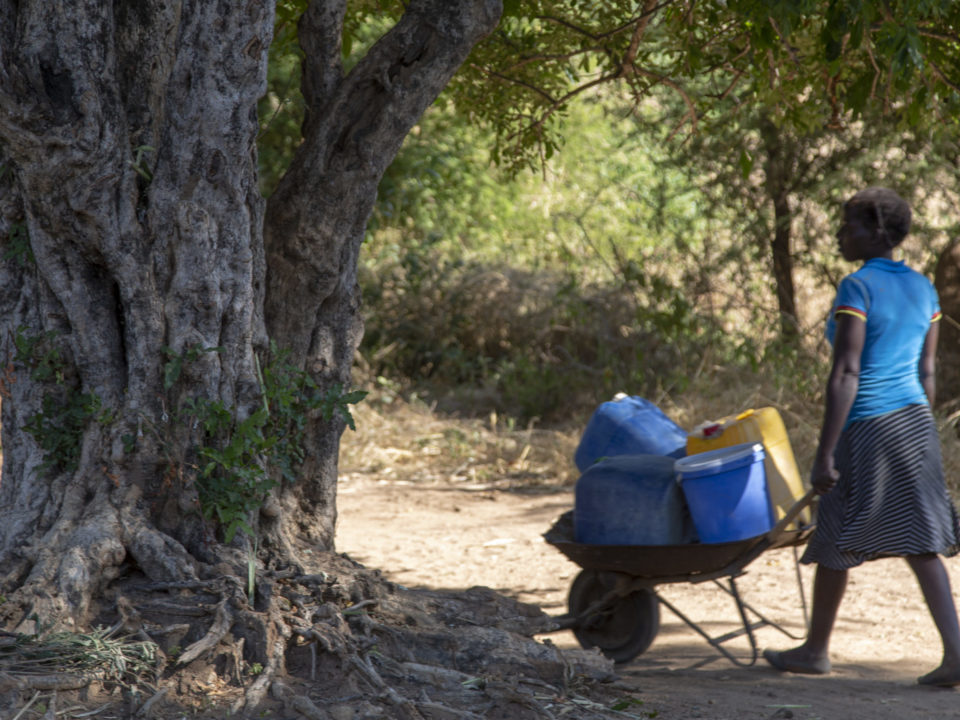
Better water for a better life
Mushumbi is in northern Zimbabwe, on the border with Mozambique. It is one of the driest parts of Africa. In recent years, the region has been […]
Read more
Energize your business with yerba mate
A gift from the gods – that’s what is said that the Guaraní called mate tea more than 1,000 years ago. It remains a cornerstone of […]
Read more

Hygiene packages gratefully received
In 2020 we helped more than 60,000 people working in our supply chains to cope with the Covid-19 crisis. Here, you can find out how our […]
Read more